#
What is the bill?

By definition, the utility bill is nothing more than a tax document, but behind the numbers there is more, much more. That is why, by learning to read the different items on the bill, you will be able to understand how and how much you spend for the water service.

How do you read the bill?

If you wish, you can consult the sheet describing the various items in the bill, or watch the video tutorial:

How to read the bill
#

Do you know how to pay your bill?

Como Acqua offers various payment methods to suit your needs and habits. Choose the one that works best for you.

WITH DIRECT DEBIT
#
Set up an automatic direct debit, also known as SEPA, on your bank or postal account. There are multiple advantages: there are no debit fees, you run no risk of forgetting the payment, and no security deposit is required if your annual water consumption is less than 500 cubic meters.
FROM THE CUSTOMER PORTAL
#
Click here to log in and go to the deDicate section
THROUGH PAGOPA
#
with the PagoPA notice attached to the bill
AT THE COUNTERS
#
Go to a Como Water counter
VIA BANK TRANSFER
#
Make a bank or postal transfer using the IBAN shown below:

IBAN: IT28M0538710900000049191240

If you are making the bank transfer from abroad, please also include the BIC/SWIFT code:

BPMOIT22XXX
#
How would you like to receive your bill? Make a green choice and zero out shipping costs

There is not only the traditional and paper format, but also the digital format.

Discover the benefits of electronic reception:

  • You will receive the bill promptly and conveniently on your email;
  • you will be able to file it digitally, you will avoid the postage costs involved in a paper bill;
  • you will contribute to reducing paper consumption and thus to protecting the environment.

Download the digital bill switch form, or request activation from Customer Portal.

How to read the meter and what data to report?
how to read your meter
The numbers on your counter to be reported are those in black before the comma.

In case of counter with comma: communicate only the numbers before the comma.
In the case of red and black numbers not separated by the comma: report only the black numbers.


In case, however, the counter has no commas or red numbers: they will be to report all numbers.
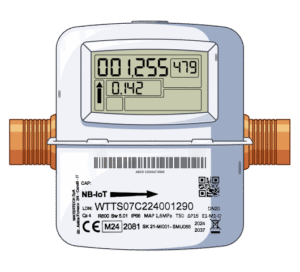

You will find the digital numbers on the smart meter for the self-reading. those before the comma must be reported.

codes to be communicated


In order to proceed with the communication of the self-reading, it is necessary to indicate: the PDP code, you can find it on your bill at the top right and left under the heading “Supply and contract data”.

Has your personal data changed? Update the information

Please note that for resident households, billing takes into account the number of household members.


If you have not yet provided the information, access the “Forms” section of our website to download the specific form, fill it out, and send it by email to the address customers@comoacqua.en or drop it off at one of our counters.


The service is also available in your restricted area of Customer Portal.

How to submit the self-reading?

FROM THE CUSTOMER PORTAL
#


Click here to log in and go to the dedicated section

VIA EMAIL
#

WRITE AN EMAIL TO THE ADDRESS:

AUTOLETTURE.CA@COMOACQUA.IT

The email subject line must contain the text:


PDP-LECTURE M3
(EX. 0123456789-123)


Do not include text in the body of the email: it will not be read

THROUGH SMS
#

SEND A TEXT MESSAGE TO THE NUMBER

O339 9903538

The body of the SMS must contain only the text composed as follows:


PDP-LECTURE M3
(EX. 0123456789-123)


AT THE COUNTERS
#


Go to a Como Water counter

VIA TELEPHONE
#


CALL THE TOLL-FREE NUMBER

800-115051

#

The Optimal Territorial Governing Body (EGA) has approved the contents of Provincial Council Resolution (DCP) No. 43 of October 10, 2024, namely the new 2024 tariffs effective from 01/01/2024 and the new 2025 tariffs effective from 01/01/2025.

The tariff schedule of the Integrated Water Service, reported below for the year 2024 and for the year 2025, is to be applied to domestic users (residents and non-residents), condominium users, and non-domestic users (industrial use, artisanal and commercial use, agricultural and zootechnical use, public use - disconnectable and non-disconnectable).

For each of the aforementioned uses, the tariff is divided into aqueduct, sewerage, and purification services, and includes a variable rate in €/m3, based on consumption, and a fixed rate in €/year, independent of consumption.

Display the fee summary for the years 2025 and 2026.

ACQUEDUCT +
Through the aqueduct service, water is withdrawn from the source, treated through purification, and introduced into the water network for distribution to users. The user pays for this service with a variable fee based on cubic meters consumed, which varies according to consumption tiers.
miscellaneous debits/credits +
They include charges/credits other than those for the provision of aqueduct, sewerage, and purification services and the fixed fee. Examples include: network connection fees, the security deposit, or default interest or, for credits, any compensation provided for in the Service Charter. The bill must always highlight what they refer to. Depending on their type, they may or may not be subject to VAT.
self-reading +
It is the number that appears on the meter on a certain date, which was recorded by the user and communicated to the utility company so that it can be used for billing.
WATER BONUS. +
It is a tool to guarantee families in financial hardship savings on their water expenses. On the bill, it appears as a negative tariff component (i.e., an amount in favor of the user).
service charter +
It is the document required by regulations whereby the service provider commits to complying with certain levels of service quality for its users. The quality levels usually concern the maximum execution times for the main services requested by the user, and in some cases, their violation may entitle the user to a refund. The Service Charter must be made available on the website and through at least one other method (for example, at the provider's customer service offices).
billed consumption +
This is the water consumption, in cubic meters, billed on the invoice for the relevant period. It may differ from the recorded consumption when a portion of estimated consumption, from the last reading or self-reading until the invoice is issued, is added to the recorded consumption.
consumption measured +
These are the water consumption figures, in cubic meters, between two meter readings or self-readings: they are therefore equal to the difference between the numbers indicated by the meter at the time of the last recorded reading (or the last self-reading) and the numbers indicated by the meter at the time of the previous recorded reading (or the previous self-reading).
ESTIMATED CONSUMPTION +
These are the water consumptions, in cubic meters, that are attributed in the absence of meter readings or self-readings, based on the best estimates of the user's historical consumption available to the utility.
security deposit +
It is a sum of money that the user pays to the operator as a security deposit and which must be returned after the termination of the contract in compliance with the applicable contractual conditions.
purification +
Through the purification service, wastewater collected from the sewer system is treated in special facilities and made compatible with the environment so that it can be released. The user pays for this service with a variable fee (euros/cubic meter) proportional to the cubic meters of water consumed. For example, if 50 cubic meters of drinking water were consumed, the purification service fee is calculated on a quantity of 50 cubic meters.
sewer +
Through the sewerage service, surface water and wastewater from human activities are collected and conveyed into the sewer network, up to the purification plant. The user pays for this service with a variable fee (euros/cubic meter) proportional to the cubic meters of water consumed. For example, if 50 cubic meters of drinking water have been consumed, the sewerage service fee is calculated on a quantity of 50 cubic meters.
cubic meter (MC) +
The cubic meter (cbm) is the unit of measurement used to indicate water consumption. 1 cbm is equivalent to 1000 liters.
arrears +
It is the situation of the user who is not up to date with bill payments. Late bill payments may result in the charging of default interest. Non-payment may lead, in some cases, to a reduction of the service and, in the most serious cases, to the suspension of the service.
equalization charges +
These are charges levied on all service users or on all users belonging to a specific category. They serve to cover costs incurred in the general interest of the system, for example, to support solidarity interventions in the event of natural disasters or for social concessions.

• The UI1 component was established by resolution 6/2013/R/COM of the Authority for Electricity, Gas and Water System (now ARERA) and subsequently updated by resolution 529/2013/R/COM, followed by Resolution 267/2023 art 11, to cover costs related to tariff concessions for the integrated water service and payment installment plans for populations affected by seismic events. The component, the value of which is set by the same authority, is calculated as a surcharge on the fees due for sewerage and purification services, is clearly itemized on the bill, and stands at a value of 0.6 as of July 1, 2023

• The UI2 component, already established by paragraph 33.1 of Annex A to Resolution 664/2015/R/idr and subsequently valued by Resolution 918/17/R/idr of ARERA (Regulatory Authority for Energy, Networks and Environment), is aimed at promoting the technical quality of aqueduct, sewerage, and purification services. The component, whose value is established by the Authority itself and updated on a semi-annual basis, is a function of volumes (in the amount of 0.9 euro cents per cubic meter as indicated by Article 9 of Resolution 918/17/R/idr) and is calculated as a surcharge on the fees due for sewerage and purification services, and clearly itemized on the invoice.

• The UI3 component, introduced by ARERA with Resolution 918/2017/R/idr exclusively for the aqueduct service, was extended, starting from 01.01.2020 (with Resolution 3/2020/R/idr), also to the sewerage and purification services. This is followed by a further update with Resolution 639/2021 art. 12 – effective from January 1, 2022. The value has been set at 1.79 euro cents/cubic meter and is aimed at covering the costs arising from the application of the water bonus.

• The UI4 component was established by ARERA with effect from 01.01.2020 by Resolution 580/2019/R/idr, then updated by Resolution 239/2023 art. 1 – effective from July 1, 2023 – to cover the management costs of the Water Infrastructure Guarantee Fund, equal to 0.0 euro cents per cubic meter and applied to each service (aqueduct, sewerage, and purification).
flat fee +
It is a fee that is paid regardless of consumption and covers a portion of the fixed costs incurred by the utility provider to deliver the service. On the bill, it is charged proportionally to the billed period. For each of the services used (aqueduct, sewerage, and purification), there is a corresponding fixed fee.
regulation +
It is the document required by regulations that governs the relationship between the operator and the user by regulating fundamental elements such as the duration, withdrawal, and termination of the contract and providing details on any breaches such as arrears, violations, unauthorized connections, etc.
user type +
Each type of user corresponds to a specific tariff (e.g. resident domestic use/industrial use/agricultural use, etc. ).